

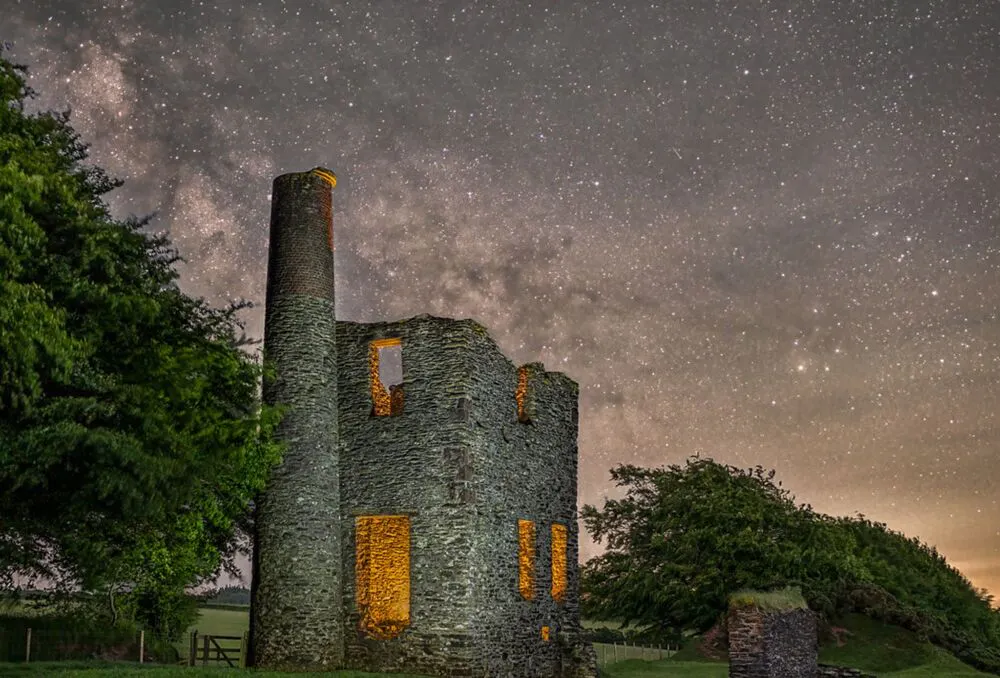
There’s something quite magical about standing beneath a sky full of stars – it’s so humbling to gaze upwards, picking out the constellations, seeing the sweep of the Milky Way, and, probably, a meteor or two. It stays with you, etched on your memory, how infinite this is, how wide the universe. One of the best places in the UK for stargazing is Exmoor National Park, designated as Europe’s first International Dark Sky Reserve in October 2011.
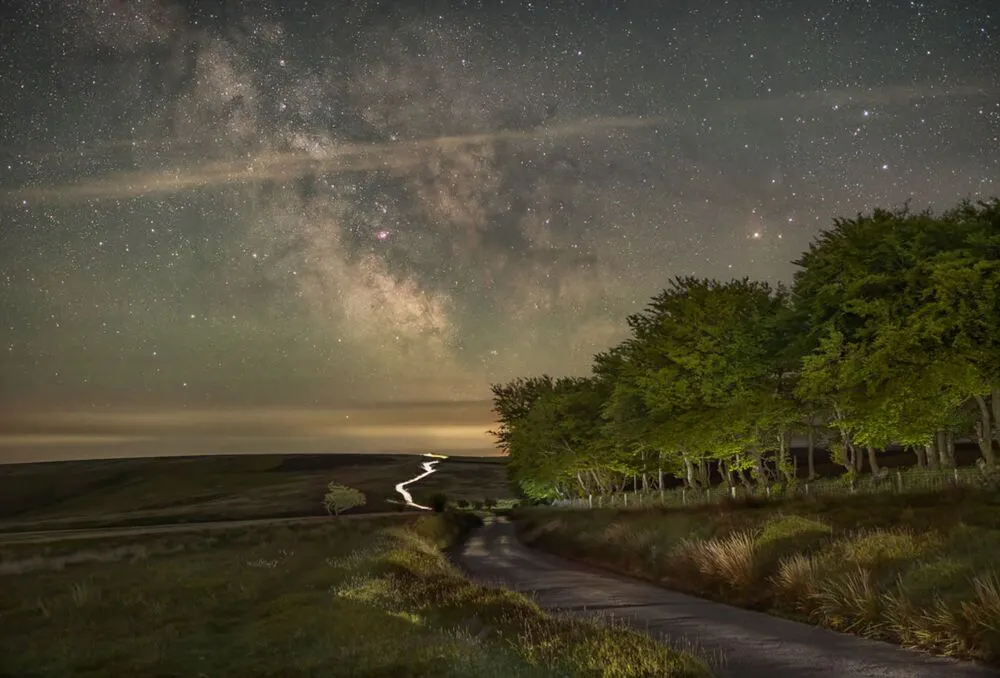
Dark Sky Reserves are areas of land with minimal light pollution, offering prime views of the night sky and protecting nocturnal ecosystems. Exmoor National Park was Certified as a Dark Sky Reserve in October 2011 by DarkSky International. There are several spots throughout the Park for optimum viewing of the night sky - places where on a clear night, the Milky Way is visible to the naked eye, you can gaze in wonder at over 3,000 stars overhead (just 200 are typically visible from a typical city location) and see constellations like Ursa Major, Ursa Minor, Cassiopeia, and Draco throughout the year.
You don’t need to be a boffin to enjoy Dark Skies. This is for everyone, from first time stargazers, families with young children, and amateur astronomers. It’s also an unforgettable experience for nature lovers interested in nocturnal wildlife, photographers keen to capture images of the night sky, and those seeking a different kind of wellness activity.
What Are the Best Stargazing Sites on Exmoor?
The whole of the National Park offers low light pollution stargazing, but it makes sense that the higher up you are, the better the viewing. 5 of the best Dark Sky Discovery Sites on Exmoor are:
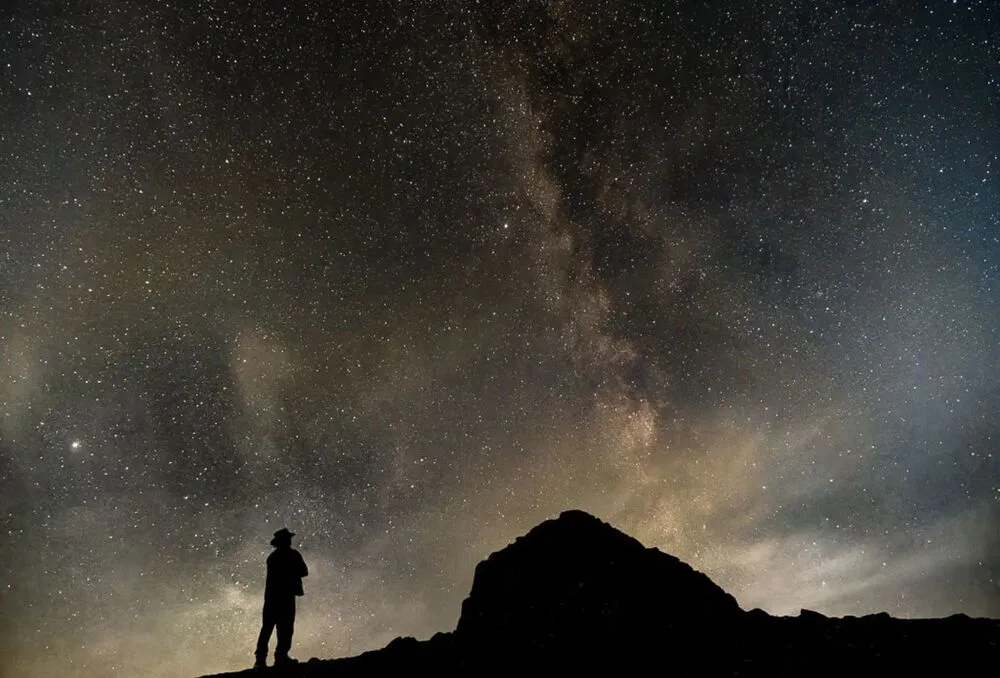
Dunkery Beacon
Dunkery Beacon is the highest point on Exmoor at 519m, with panoramic views, especially from the south side. Walking up to the trig point by torchlight adds excitement to your nocturnal outing. On summer nights you might even hear the churring of a nightjar and the trill of a grasshopper warbler.
Wimbleball Lake
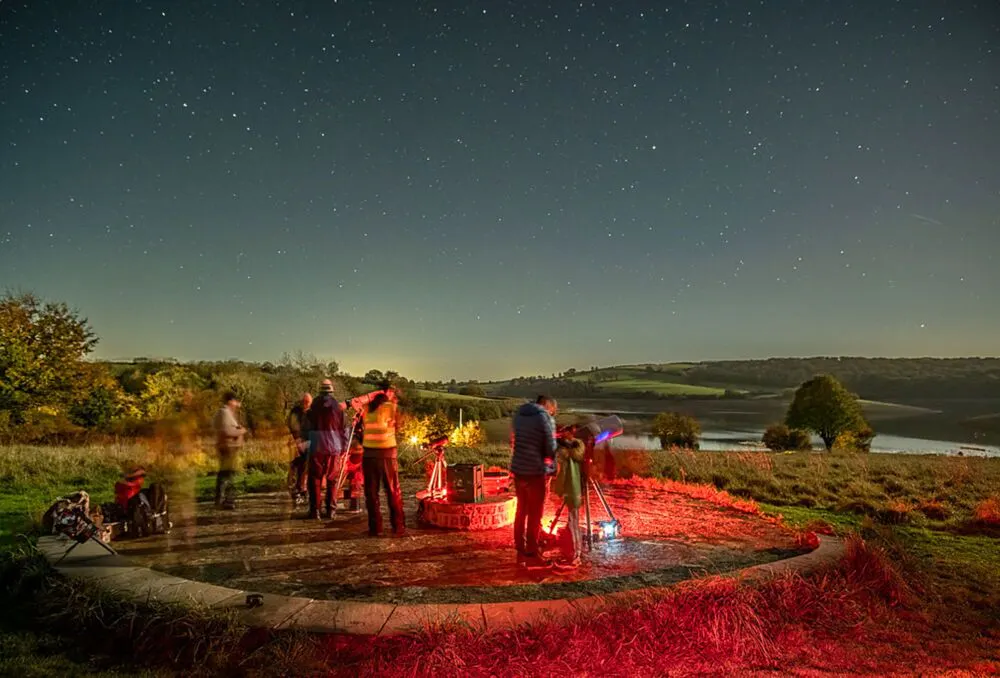
The wide-open horizons at Wimbleball Lake make it ideal for naked-eye stargazing and astrophotography, with the night sky reflected in the water. There’s a Discovery Hub on site where regular events are hosted.
Webbers Post
Webbers Post is a look-out point that’s about 300m above sea level on the Holnicote Estate between Porlock and Dunkery Beacon. It’s a brilliant spot to take in the whole of the night sky.
County Gate
County Gate is where Devon and Somerset meet, 345m above sea level, with staggering views over the East Lyn Valley and Lorna Doone country. It’s convenient for observing the night sky as there’s a car park and loos, and it’s only a short drive from the National Park Centre at Lynmouth where telescopes can be hired.
Haddon Hill
At 355m, Haddon Hill gives you panoramic views of the night sky, with the Milky Way usually visible. There’s a car park with loos, and a flat grassy area for viewing makes it accessible and a good choice for families with younger children. Other good sites for stargazing on Exmoor are Bossington Hill, Holdstone Hill, Brendon Two Gates, and Anstey Gate. For more information and a map see the Exmoor National Park Dark Skies Guide.
What’s the Best Time of Year for Stargazing on Exmoor?
With such low levels of light pollution, Exmoor National Park is one of the best sites in the UK for stargazing all year. Clear skies are essential of course, so some months are better than others – summer is one of the best times, when warm weather and blue skies
during the day give way to cloudless nighttime conditions and the heavens are studded with stars. The nights are still warm, so this is ideal for a nighttime foray on the Exmoor Dark Sky Discovery Trail.
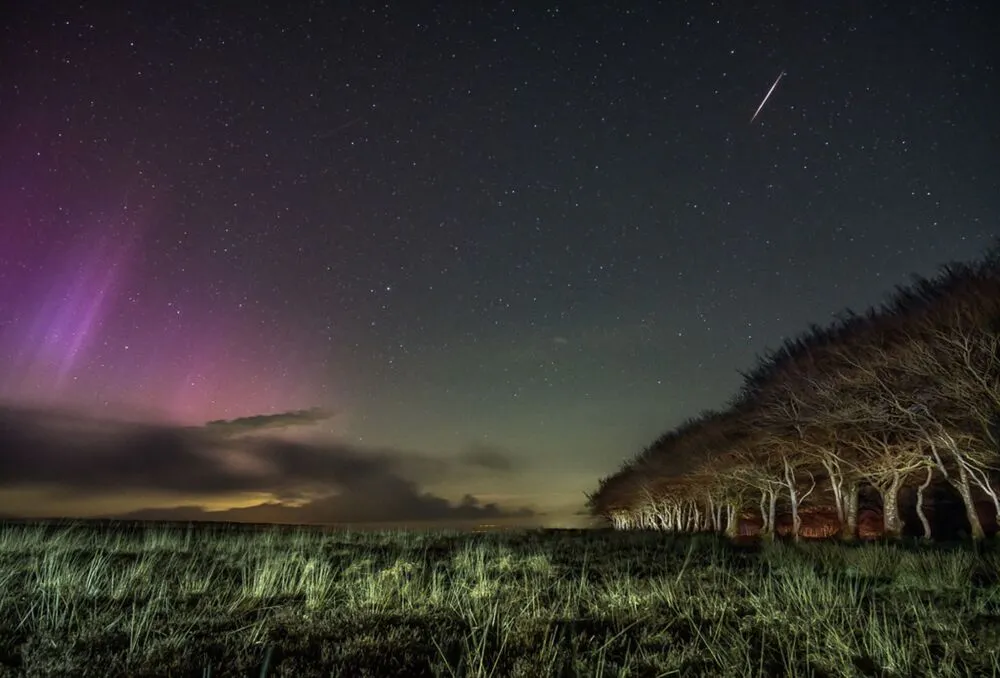
October and November are also good, with earlier, longer nights and clearer weather offering excellent conditions for stargazing. This is when the Exmoor Dark Skies Festival takes place each year, with events spread all over the Park.
Exmoor Dark Skies Festival
Exmoor Dark Skies Festival is one of the UK’s top astronomy events. For 2026, this will be held from Friday 16th October to Sunday 1st November. Dates are carefully chosen for when the moon won’t be at its brightest, ensuring perfect star viewing with the skies at their darkest.
The festival runs a host of events for all, with activities for families and children, workshops, talks, dark skies yoga, planetarium experiences, stargazing nights and nocturnal nature walks. For many, it’s the start of a lifelong passion learning about the stars and constellations, for people who live in towns and cities with high levels of light pollution, it’s a chance to experience truly dark skies. Many of the activity providers have received dark skies training and have been accredited as Dark Sky Friendly businesses. This is a big thing on Exmoor.
Exmoor Dark Sky Discovery Trail
Exmoor Dark Sky Discovery Trail takes you on a 2 mile nighttime journey, starting from the small car park at Larkbarrow Corner to the ruins of Larkbarrow Farm. The walk is mostly level across open moorland with luminescent waymarks to guide you. Be still, be quiet and this becomes an incredible experience, the stars and planets above, the only sounds the soft moorland breezes in the trees, the hoot of an owl, and maybe the gentle low of distant sheep or cattle.
Do I Need Special Equipment for Stargazing?
If you’re well into astronomy, photography or nocturnal wildlife you’ll already have specialist equipment such as telescopes, binoculars and cameras that you’ll want to bring with you for your dark skies experience. If you haven’t done this before, warm clothing is a must, depending on the time of year; in the cooler months clear skies generally mean lower nighttime temperatures. Layers are best and you’d also be wise to pack hats, scarves and gloves. If you’re sitting on blankets with a waterproof backing, or camping chairs are a good idea.
You might want to have binoculars and torches, though bear in mind that the usual white light torches aren’t the best for stargazing –what you need are red light torches. You can buy these online from as little as £10. Telescopes can be hired from the Exmoor National Park Centres at Dulverton, Dunster and Lynmouth throughout the year. These and other places with Dark Skies Friendly accreditation often provide maps, binoculars and more specialist equipment.
Are There Places to Eat Before We Go Stargazing?
Dining before your night’s viewing makes a memorable dark skies experience, and you’ll find several Dark Sky Friendly pubs near top stargazing sites on Exmoor. These range from rustic country pubs to restaurants, tea rooms and coastal eateries. It’s such a lovely thought - fill your bellies with hearty hot food then wrap up warm for a night of discovery beneath the nighttime skies.
Where Can I find Accommodation for Stargazing on Exmoor?
There are hundreds of places to stay throughout the Park, ranging from hostels, B&Bs and hotels, to self-catering accommodation including caravan and camp sites, farms, and holiday cottages. If there’s a group of you, Sleeps12 have large holiday houses in or very close to Exmoor National Park sleeping up to 24 guests. These come with exclusive use swimming pools, hot tubs, games rooms, BBQ lodges, movie rooms and play areas. There is nothing quite like a stargazing experience on Exmoor. The fresh nighttime air, the peace and quiet, the breathtaking beauty of thousands of stars coruscating. This is joyful, this is something you won’t ever forget.